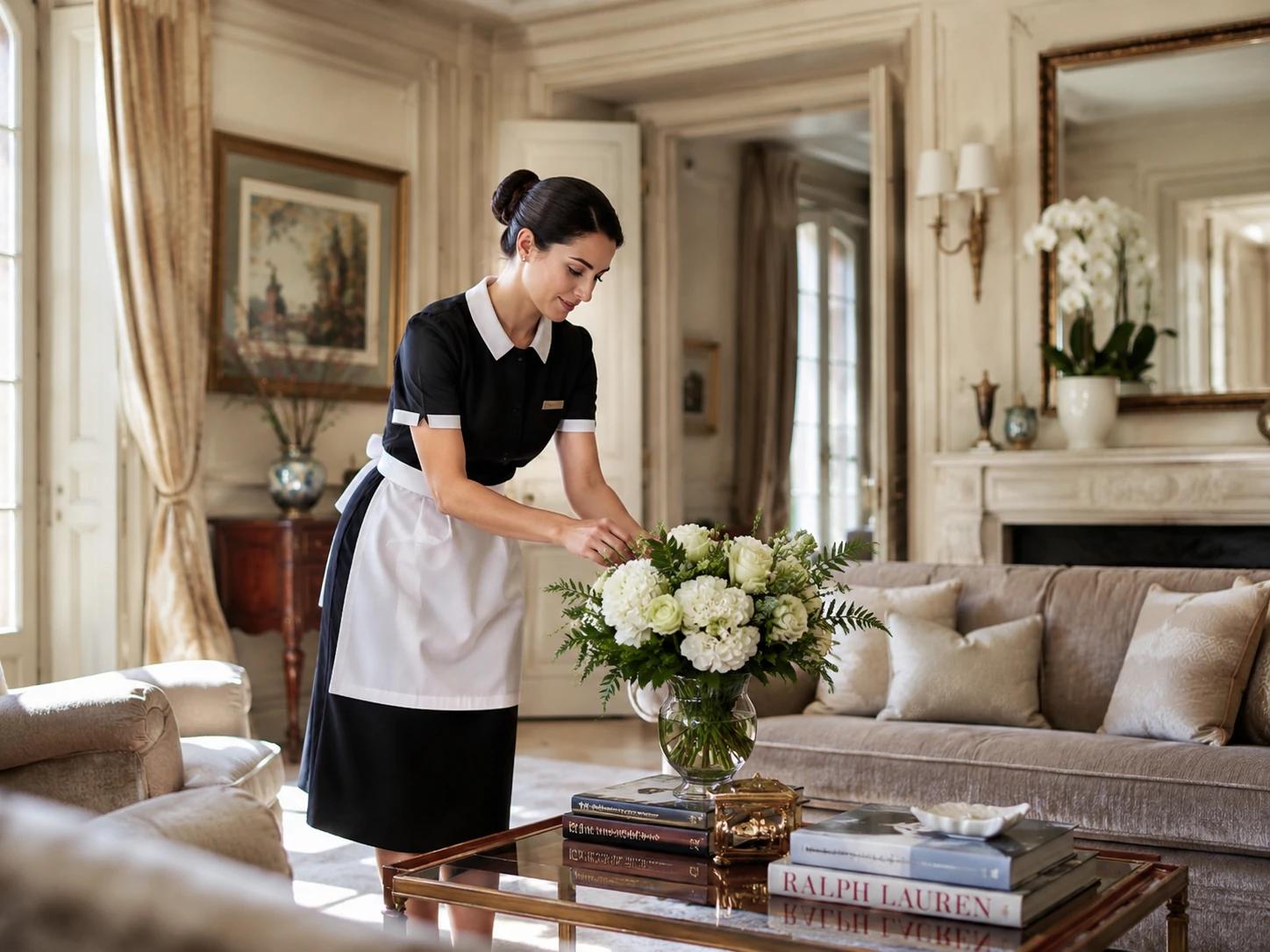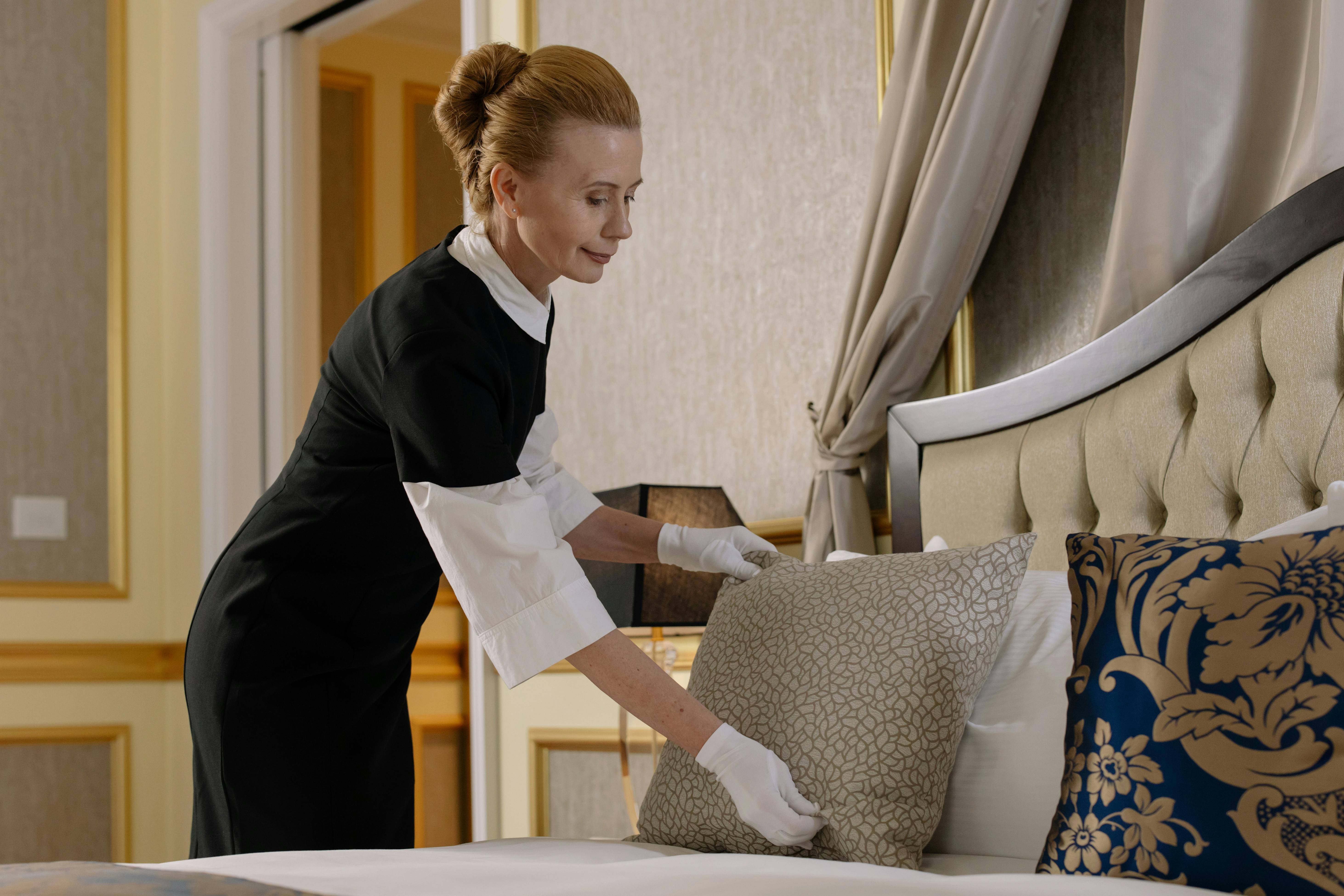
A housekeeper is not just a “visiting cleaning fairy,” but a true architect of your household comfort. She does not simply remove visible dirt the way a cleaning service does — she takes on the entire routine, making her presence in your life almost invisible, yet deeply felt through the atmosphere of comfort she creates.
Imagine the difference between a hotel, where cleaning is standardized, and your own home, where everything is arranged exactly the way you prefer. That is the magic of a true professional.
A good housekeeper knows the home almost as well as its owners. She understands which surfaces require special care, where cleaning products must be selected carefully, how to handle an expensive wardrobe and sophisticated appliances. Over time, she learns the family’s habits, daily rhythm, and small nuances — and this is what creates a deep sense of calm and stability.
Key responsibilities of a housekeeper
The work of a housekeeper is focused on maintaining cleanliness, structured order, and a comfortable atmosphere in the home, as well as assisting the family with everyday household matters. These responsibilities typically include:
- Performing regular and deep cleaning in all rooms and areas of the home.
- Cleaning furniture facades, mirrors, kitchen appliances, household electronics, and sanitary areas.
- Washing floors, windows, and doors.
- Organizing and maintaining tidy storage in wardrobes, closets, and utility areas.
- Carefully dusting interior items and decorative elements.
- Laundry, ironing of personal clothing, and comprehensive care of household textiles.
- Periodic changing of bed linens and towels.
- Monitoring household supplies and purchasing necessary cleaning and domestic products.
- Washing dishes and maintaining kitchen utensils in perfect condition.
- Monitoring the working condition of appliances and performing basic maintenance procedures.
- Creating and maintaining overall comfort and a pleasant indoor atmosphere.
- Setting the dining area for everyday meals or special occasions.
- Watering and providing basic care for indoor plants.
- Preparing the interior for guests and festive events.
- Completing additional household errands upon the homeowner’s request.
All candidates undergo pre-selection, including testing their knowledge of proper care for homes, offices, or apartments.
What is NOT included in a housekeeper’s duties
Even with a broad range of responsibilities, there are clear boundaries — and this is both normal and appropriate.
A housekeeper does not perform repair or construction work, complex technical servicing, or tasks beyond household management. She is also not a nanny: childcare, education, escorting children to activities, or medical supervision require a separately qualified specialist.
If a family requires expanded responsibilities, these are discussed separately and an appropriate professional with relevant experience is selected.
Housekeeper work formats
Several employment formats are available depending on the size of the home and the level of delegation required.
Live-in housekeeper
This format is suitable for large homes and families who want a housekeeper always present. She lives in the home and is fully integrated into the family’s daily rhythm, ensuring continuous care of the house, textiles, and kitchen.
Live-out housekeeper
This option works well for smaller homes or families with a more flexible schedule. The housekeeper comes according to an agreed timetable, performs cleaning, wardrobe care, and other household tasks, but does not reside in the home.
Hourly or full-time employment
A housekeeper may work on an hourly basis or full-time, depending on the family’s needs. Hourly work is convenient for smaller cleaning volumes or temporary assistance, while full-time employment ensures systematic care and consistent order maintenance.
How to properly hire a housekeeper
This is not about speed — it is about precision.
It is important to define expectations in advance: schedule, responsibilities, and format of interaction. Experience working in private households, references, and the ability to maintain confidentiality are all essential factors.
Equally important are personal qualities: tact, accuracy, attentiveness, and the ability to listen and adapt.
That is why professional recruitment is always based not only on skills, but also on psychological compatibility.
Independent search or recruitment agency?
Searching independently requires time, attention, and readiness to assume risks. Document verification, reference checks, and experience validation all fall on the family.
Working through an agency removes these responsibilities and provides access to a pre-screened database of professionals, including candidates with international experience, language skills, and valid visas. For busy individuals, this often becomes the decisive factor.
How to choose a housekeeper without risks or disappointment
A housekeeper is not just an assistant — she is someone entrusted with your personal space and daily rhythm. A thoughtful selection process, transparent agreements, and professional recruitment make it possible to build long-term cooperation that works for years without the need for constant supervision.
Frequently Asked Questions (FAQ)
Is it necessary to sign a contract with a housekeeper?
Yes, a contract is essential regardless of the employment format. It defines responsibilities, schedule, compensation, and replacement procedures. For the family, it guarantees compliance with agreed terms; for the professional, it ensures clear rules and protected working conditions.
How to monitor the quality of work?
Control should be based on clear expectations and calm feedback. Regular communication is more effective than checklists. Addressing concerns immediately helps maintain trust and long-term cooperation without constant supervision.
What if the housekeeper is not the right fit?
First, discuss the issue — often it is enough to clarify tasks or adjust the schedule. If cooperation does not work out, it is best to have a replacement plan in advance so that the transition is smooth and the home remains properly cared for.